The theme song makes me ridiculously happy. It brings back so many good childhood memories.
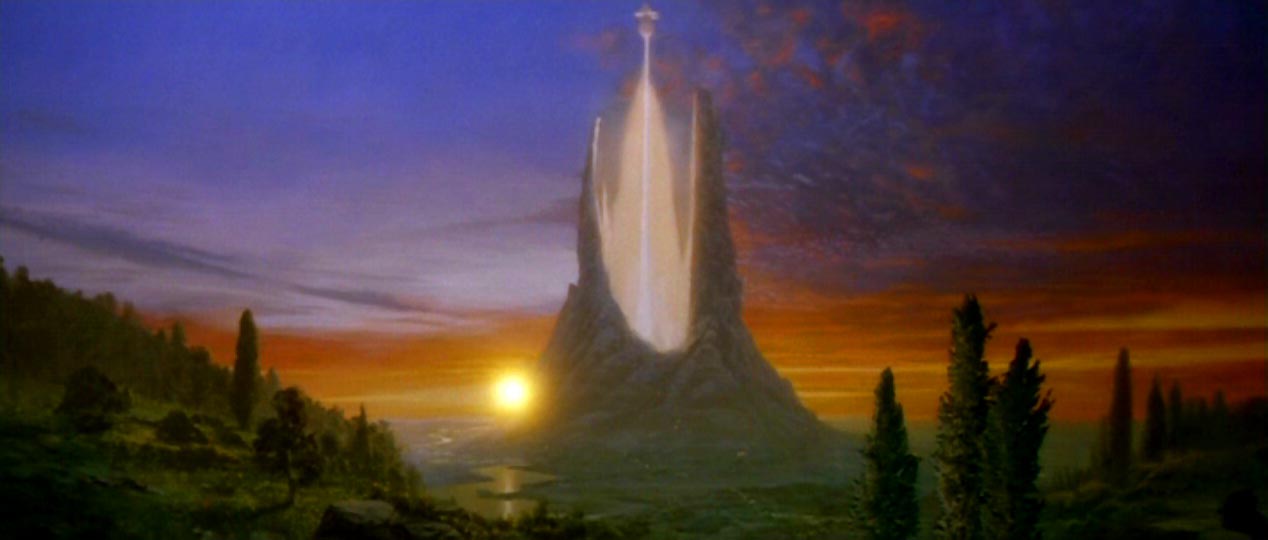
The Neverending Story was one of my favourite movies as a kid, and having recently read the book, I thought it was time for a revisit. Did it stand the test of time? Well... yes and no. The special effects obviously aren't great, and the acting is really, really bad. But the story is still pretty magical. It may be the nostalgia talking, but I still enjoyed it. Even though I laughed at it way more than with it. On to the comparison...
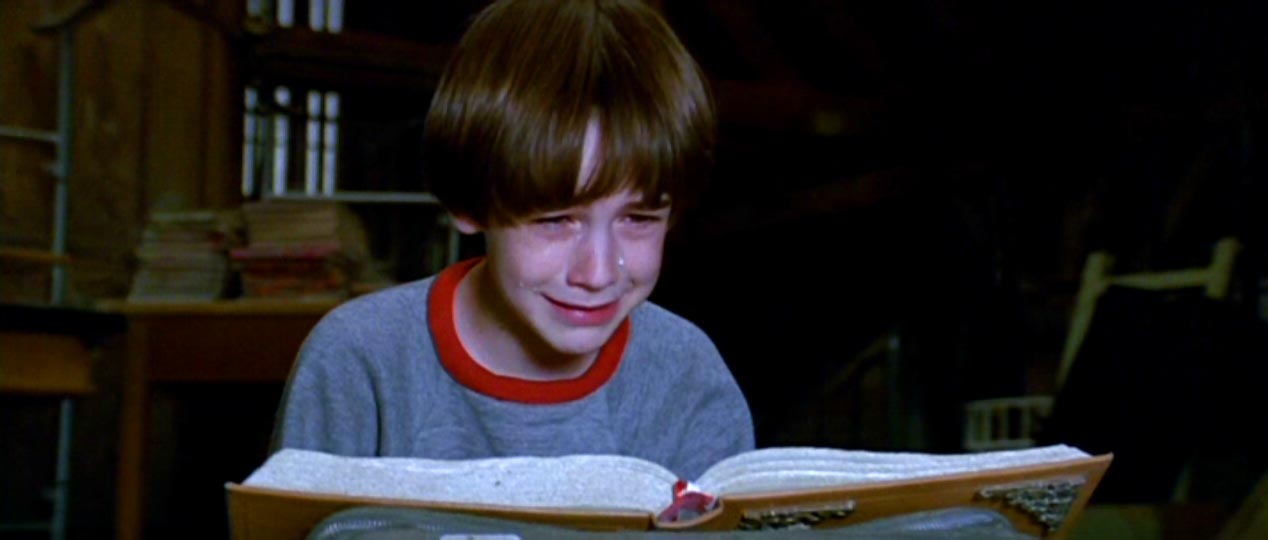
Note to filmmakers: getting a kid to scrunch his eyes up and splashing water on his face does not equal realistic crying.
Changes that worked
The land was named Fantasia in the movie, rather than Fantastica. Maybe it's because I grew up with the movie, but I much prefer the name Fantasia.
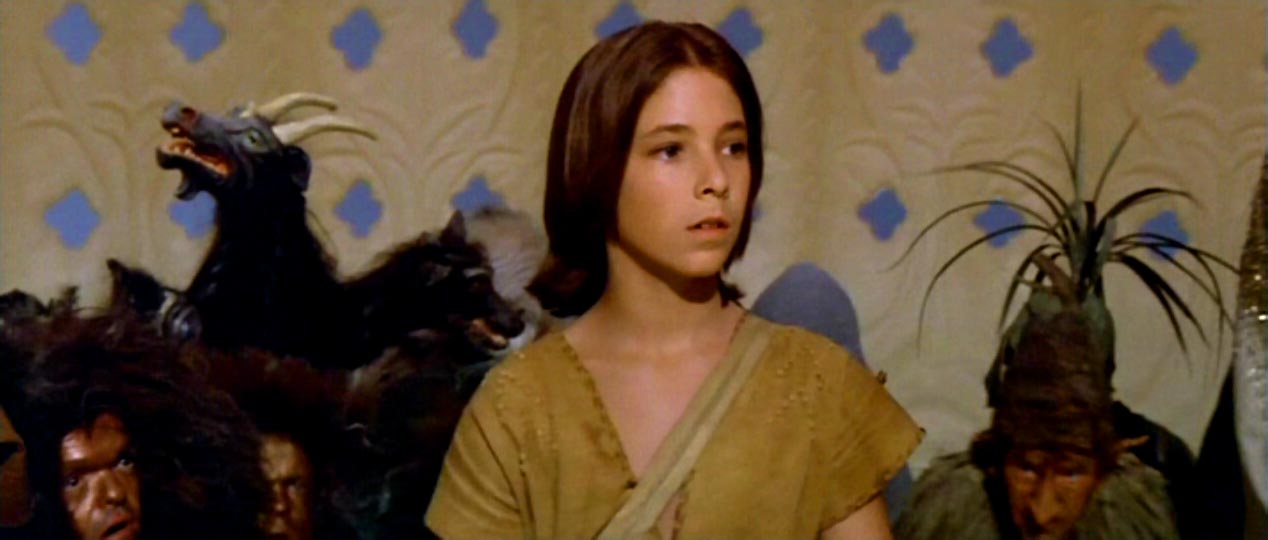
We first meet Atreyu in the Ivory Tower, rather than his own land. I can understand why this was done - I'm sure it was for budget/time reasons, but I liked how it moved us straight in to the action.
Atreyu doesn't have green skin, but really I think it would have just been distracting. Apparently the filmmakers did experiment with turning the actor's skin green with a few different techniques, but nothing looked right. I'm glad they passed.
Artax the horse can't speak as he can in the book, but again I think it would have just been cheesy if they had carried this over to the film. Plus Atreyu has the ability to understand him, anyway.
There were only two gates to get to the Oracle, not three. It's not as
pretty or "magical" a number, but I can see why it would have been
cut for time constraints. The Oracle itself is a pair of sphinxes,
rather than a bodiless "song" - again, I can understand why this change
was made. As it was in the book I don't think it would have worked on screen.
The Nothing looks like a storm, rather than literally nothing. Again, the book version wouldn't have worked in a visual medium.
Atreyu meets the Rock Biter. I liked that it tied the beginning of the story in to the larger narrative.
We see Falcor and the other characters almost immediately after Fantasia is restored, as opposed to the numerous chapters it takes to get back to them in the book. They're the characters we've come to care about, so it makes sense to continue the journey with them as soon as possible.
The movie only covers the first half of the book - but where they end the story makes a lot more sense than the way it was dragged out in the novel.
I used to think Atreyu was dreamy. Huh.
Changes that didn't work
In the book, Bastian's dad is still mourning the loss of his wife and barely functioning, neglecting Bastian as a result. Bastian, while he misses his mum, wants to get on with life, and part of the beauty of the book is the way his journey ultimately takes him back home - to his dad, and to love. In the movie, however, it is Bastian who is struggling to cope without his mother, while his dad urges him to move on. His dad is caring but distant and a little hard on him. I just felt Bastian's loneliness was more palpable in the book, where he had effectively lost two parents at once. The movie also didn't resolve Bastian's relationship with his father, which was frustrating.
The book-within-the-movie, The Neverending Story, is described as a dangerous, one-off magical item, whereas the book-within-the-book was just one of many pathways to Fantastica, the land of stories. The movie version weakens the allegory of what it means to get lost in a story. In fact, Fantasia is described as the land of dreams, not stories, in the film. Not the same thing!
When Bastian takes the book, he leaves a note saying he'll bring it back - something he doesn't do in the book. While this makes him a nicer character, it doesn't explain why he has to hide away in the school attic all day, creating a plot hole.
AURYN's power isn't explained properly, so, for example, it's not clear why Atreyu isn't pulled down by the sadness in the swamps.
Falcor rescues Atreyu, not the other way around. This is pretty random and doesn't explain Falcor's devotion to the boy.
The Nothing doesn't seem as threatening as it does in the book - people don't feel the compulsion to walk in to it (that, for me, was the scariest part). We even see Falcor flying through the Nothing - which makes absolutely no sense. It's not Nothing if you can fly through it! OK, it's not Nothing if you can see it either, and I said that worked for the film - but having Falcor and Atreyu travelling through it just makes it seem even less frightening.
The Empress is much less empowered in the movie. She doesn't take action herself, as she does in the book. Leaving zero strong female characters.
The Empress gives Bastian sand, "all that's left of Fantastia" to make a wish, instead of AURYN. Seriously, why did they bother putting AURYN in the movie if they weren't going to make use of it?!
After Bastian restores Fantasia, EVERYONE comes back, "like the Nothing never was". I'm all for a happy ending, but even Artax comes back - and he didn't even die because of the Nothing. He died because of the swamp. It makes no sense, and again undermines the danger of the Nothing in the first place.
Bastian flies on Falcor's back through New York City (don't ask me how they get there) to take vengeance on his bullies. An eye for an eye isn't exactly a good message (though perhaps I'm particularly sensitive to that thanks to the current atmosphere in blogland), but moreover - it's just tacky, cheesy and really, really lame.
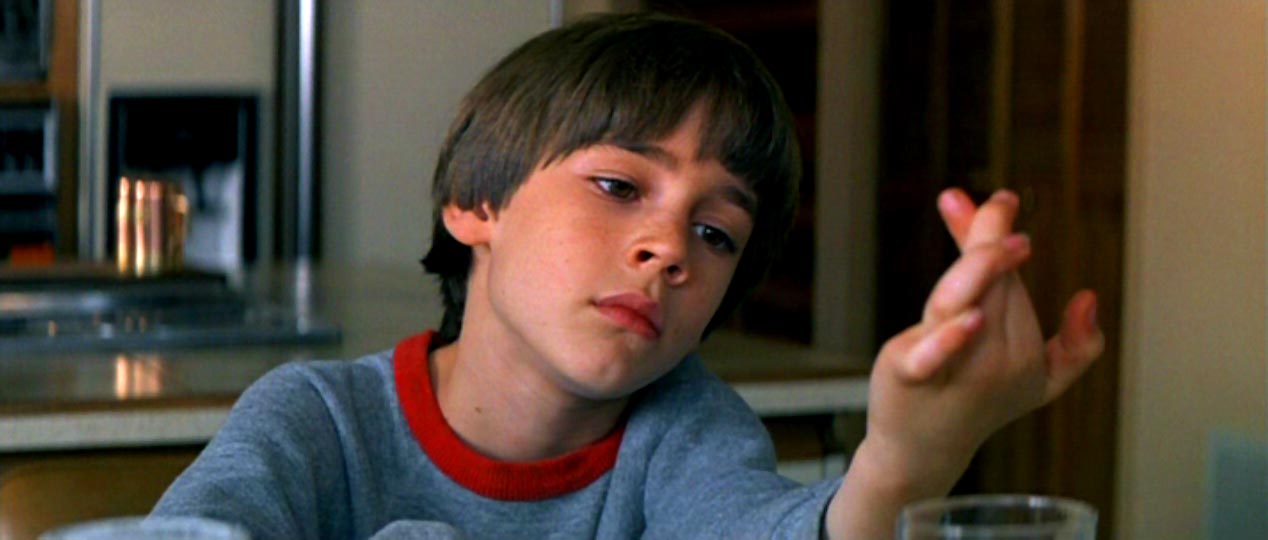
Remember the finger thing?! I didn't until I saw it again and then
had all these flashbacks to my friends and I trying desperately to get
our fingers to do that. I don't think any of us succeeded. Luckily, we
didn't break any fingers either.
Changes that didn't matter
I know some people may disagree, but the change in Bastian's physical appearance (from fat and unattractive to skinny and cute) didn't materially affect the story for me. You don't have to be fat to feel like an outsider, or to be bullied, or to want to get lost in stories. Just sayin'.
The Rock Biter is the character we first "follow" into Fantasia, rather than the Will-o-the-Wisp, but the scene achieved the same message - that the Nothing was consuming all parts of the land.
The Neverending Story was one of my favourite movies growing up, but embarrassingly, I didn't actually realise it was a book until recently. I ordered it from Book Depository as soon as I found out, and finally got around to reading it on my honeymoon.
This has been a hard review for me to write because I'm so torn about this book. Or, rather, The Neverending Story feels torn to me - because it was like reading two books, the first part of which I absolutely loved, while the second part gave me mixed feelings. Interestingly, it's the first half of the book that the movie is based on - while the sequel, The Neverending Story II, is based on the latter half of the book. Perhaps my experiences with the movies shaped my reading, but there was a cut-off point midway through the book that felt like a good place to end it. Unfortunately, it just kept going, taking on a far different tone that really did make it feel like a different book. At that stage, the title The Neverending Story felt quite fitting - and not in a good way.
But let's go back to the beginning - which, as I said, I adored. It tells the story that every '80s or '90s kid will be familiar with - Bastian Balthazar Bux is a bullied boy (alliteration FTW!) who takes refuge in an attic with a magical book that follows the young warrior Atreyu as he battles monsters and rescues dragons on his quest to save Fantastica (not Fantasia, as it is in the movies) from the Nothing. It's a wonderful story in itself and also in the way it's written as a homage to stories. The asides that showcase Bastian's thoughts and actions as he reads will be recognisable to any reader. It's a book about the enjoyment of books and the importance of stories, which is just lovely.
But that story reaches its resolution halfway through the book. We're then taken on an entirely different journey, as Bastian enters Fantastica himself and is revered as a saviour. The magic he's given there, and the actions he takes, cause him to literally lose himself, as he forgets everything but his first name and must somehow still find a way back to "what he truly wants" (to love). I think Ende was trying to balance out the first half of the book here and send the message that it's important to use stories not just to escape, but also to enrich reality, so you don't lose yourself or what really matters along the way.
That's all well and good, but the problem for me was that I just didn't enjoy the story all that much. Bastian goes from being someone the reader can sympathise with to, well, a complete turd. As soon as he enters Fantastica things don't feel right; after spending hundreds of pages anxiously following Atreyu and Falcor's journey, they're nowhere in sight and he doesn't give them a second thought for quite some time. He's no longer a reader, too wrapped up in his own adventures to worry about their fate. Unfortunately, I was still a reader, and I wanted to know what had happened to them, dammit.
It's downhill from there for Bastian, and for me as a reader. There were some lovely moments and many new fantastic, whimsical characters and settings along the way, but with such a horrid main character I found my interest in his adventures waning and I was impatient for the whole thing to be wrapped up.
Overall, I liked the book, but I didn't adore it the way I thought I would. If I was to rate it as two separate books, as it felt, I'd give the first half 5/5 and the second 3/5. I guess that averages out to....
Rating: 4/5
Related
I just had to post this. Oh, the hilarity nostalgia...
Coming Up
I'll be revisiting the movie for the first time in nearly 20 years. Let's see how time has treated it...